Ōni
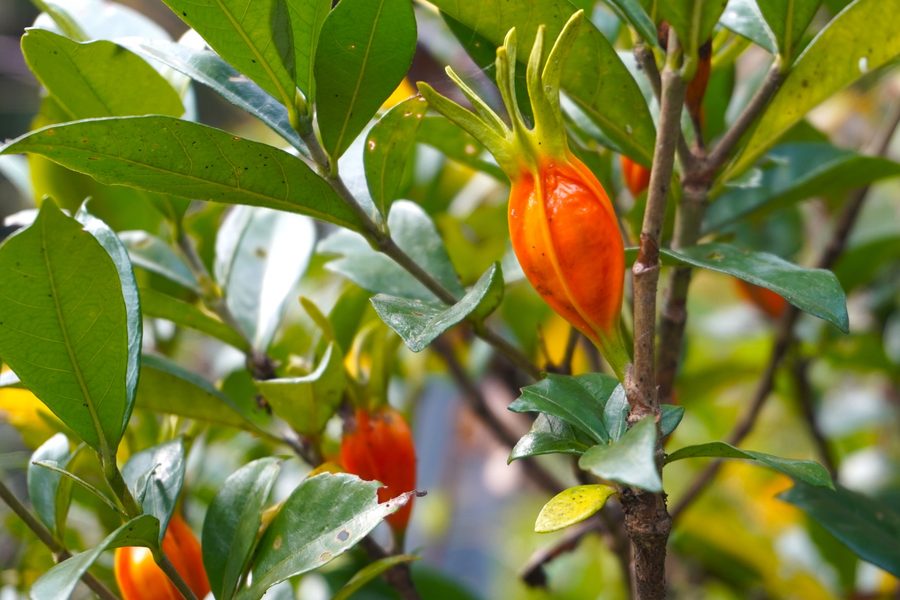
An orange dyed from safflower and gardenia, named for its likeness to red-lead pigment. As a forbidden color, it was reserved for the robe of the crown prince.
How it was dyed in 927
The Engishiki — the court regulations completed in 927 — records exactly what the palace dyehouse was allotted to dye this color. Quantities are per bolt of cloth; units are left in the original (1 kin ≈ 600 g, 1 shō ≈ 0.7 L in later standards — Heian equivalents are debated).
黄丹 おうに Ōni orange
The Engishiki also gives scaled quantities for: 1 bolt of plain silk · 1 bolt of ra gauze · 1 skein of silk thread.
Original text 原文
黄丹綾一疋、紅花大十斤八両、支子一斗二升、酢一斗、麸五升、藁四囲、薪一百八十斤、〈准生木所定、余皆准此、〉帛一疋、紅花大七斤、支子九升、酢七升、麸四升、藁三囲、薪一百廿斤、羅一疋、〈用度同帛、〉糸一絇、紅花大二斤八両、支子三升、酢二升三合、麸二升、藁一囲、薪六十斤、
Text: 『デジタル延喜式』校訂文(縫殿寮), National Museum of Japanese History · 1900 printed edition (NDL)
Tints & shades
Harmonies within the tradition
Complementary and triadic companions, chosen from real traditional colors — not computed values.
Similar colors
The namesake
梔子の実 紅花 — what the name literally points to.